
Chimney cleaning in Naperville, IL
Soot, creosote, nests, leaves and rust all end up in a chimney sooner or later. We clear the whole system, from the cap and the flue down to the smoke chamber and the firebox, and leave it drawing the way it should.
- Wood and gas fireplaces
- Nests and debris removed
- Caps and vents cleared
Signs your chimney needs a cleaning
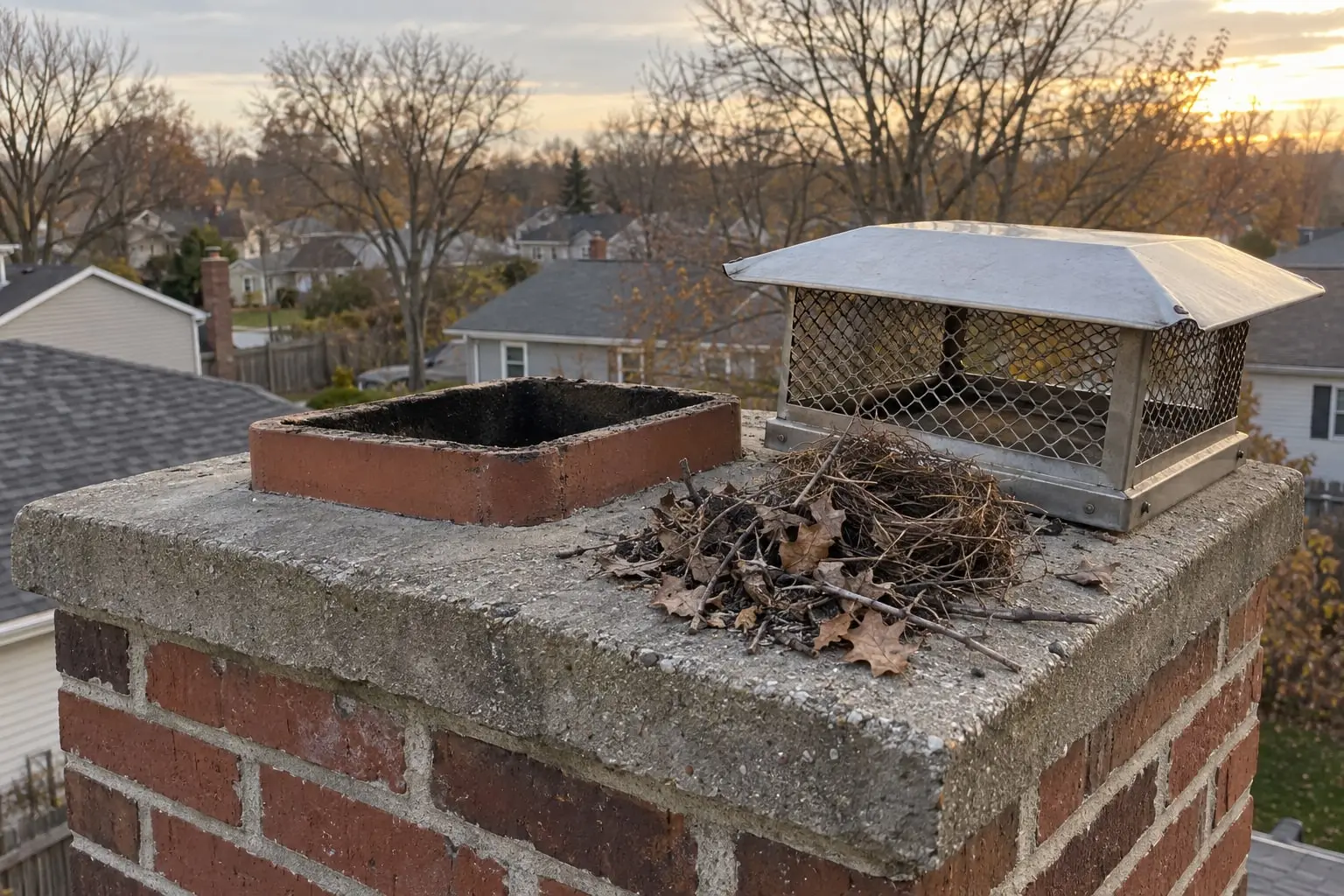
A chimney collects more than soot. Birds and squirrels nest in uncapped flues every spring, leaves and twigs blow in through the fall, and caps clog with soot and debris until the smoke has nowhere to go.
These are the signs we hear about most.
- A smoky or musty smell from the fireplace, even when it is not in use
- Smoke backing into the room when you light a fire
- Debris, twigs or soot falling into the firebox
- Animal sounds or a nest visible at the top of the flue
- A cap or spark screen caked with soot
- A gas fireplace with a sooty glass front or a pilot that will not stay lit
What you get with Chimney cleaning
Lower fire risk
Creosote and dry nesting material are the fuel of chimney fires. Clearing them out takes that fuel away.
Fresher air at home
A clean chimney stops the smoky, musty smell that drifts into the room, especially on humid summer days.
Longer-lasting parts
Soot and creosote hold moisture against the liner, the damper and the cap. Removing them slows rust and corrosion.
No mess left behind
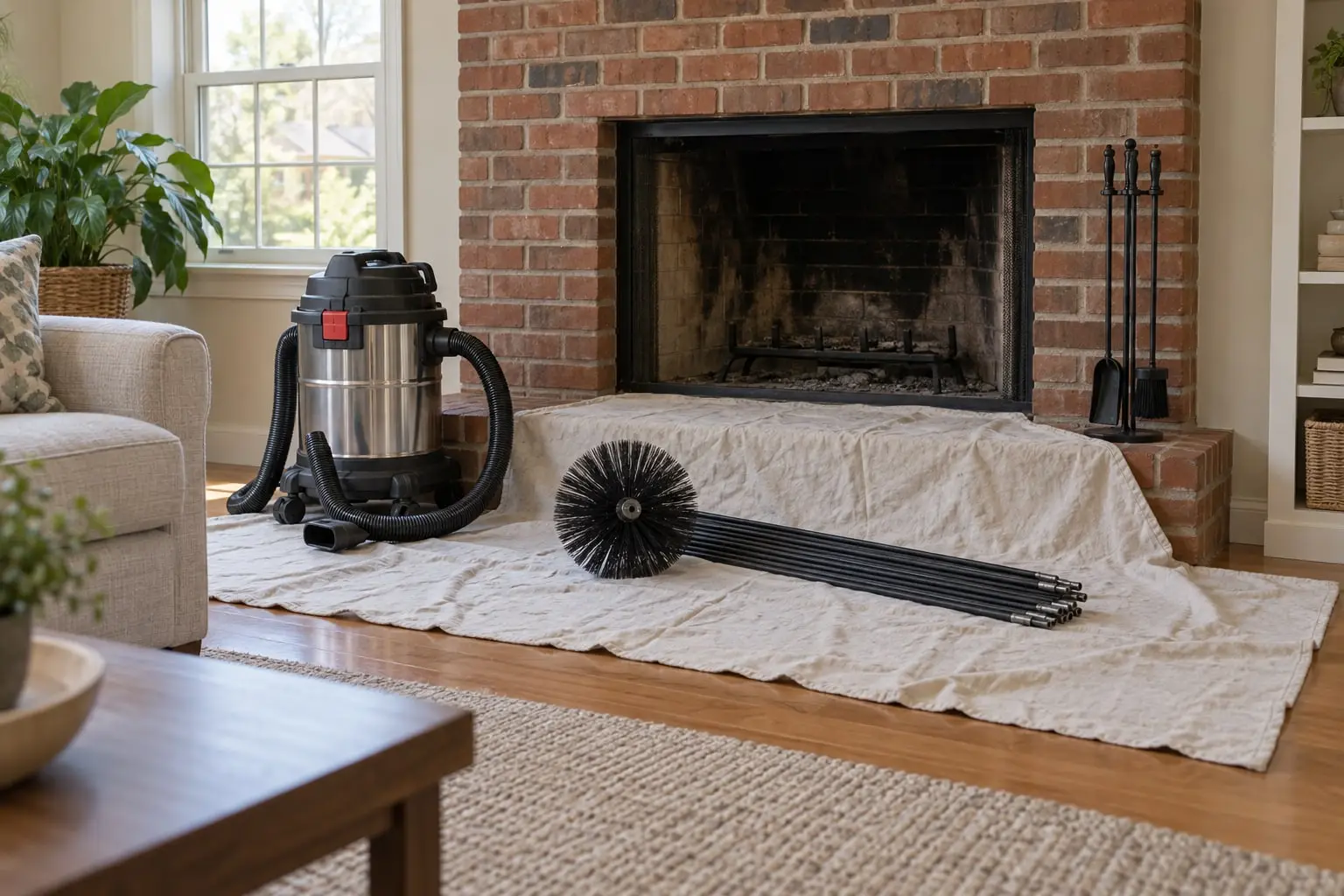
Drop cloths, a HEPA-filtered vacuum and a clean hearth when we leave. The dirt goes out with us.
What a chimney cleaning includes
Every cleaning is matched to the chimney in front of us. These are the steps most visits include.
- Room protected around the hearth before work starts
- Flue cleared of creosote, soot and debris
- Nests and animal material removed, and the flue capped if it has no cap
- Smoke chamber, smoke shelf, damper and firebox cleaned
- Chimney cap and spark screen cleaned or replaced if rusted
- Gas fireplace vents checked and cleared
- A final draft check before we pack up
Gas fireplaces need cleaning too
Gas burns cleaner than wood, but a gas fireplace still has a vent that birds, insects and debris can block, and a blocked gas vent can send exhaust back into the house. We check and clear the vent and the termination cap and look at the glass and the logs for signs that something is not burning right.
Chimney cleaning questions
How often should a chimney be cleaned?
Once a year for a fireplace or stove in regular use, and whenever a check finds a nest, debris or heavy buildup. Gas fireplaces should have their vent checked and cleared once a year too.
Can you remove a bird or animal nest?
Yes. We remove the nest and the debris under it, and if the flue has no cap we recommend one so it does not happen again next spring.
Why does my fireplace smell in the summer?
Creosote and soot in the flue give off a smoky smell when the air is humid, and air conditioning can pull that air down the chimney into the room. A cleaning and a well-fitting damper usually solve it.
Do you clean chimney caps?
Yes. A cap's screen clogs with soot and debris over time, which chokes the draft. We clean it, or replace it if it has rusted through.
How long does a cleaning take?
About an hour for most chimneys. A heavily blocked flue, a nest removal or a chimney with several flues can take longer, and we tell you before we start if it will.
Other services we provide
Chimney sweep
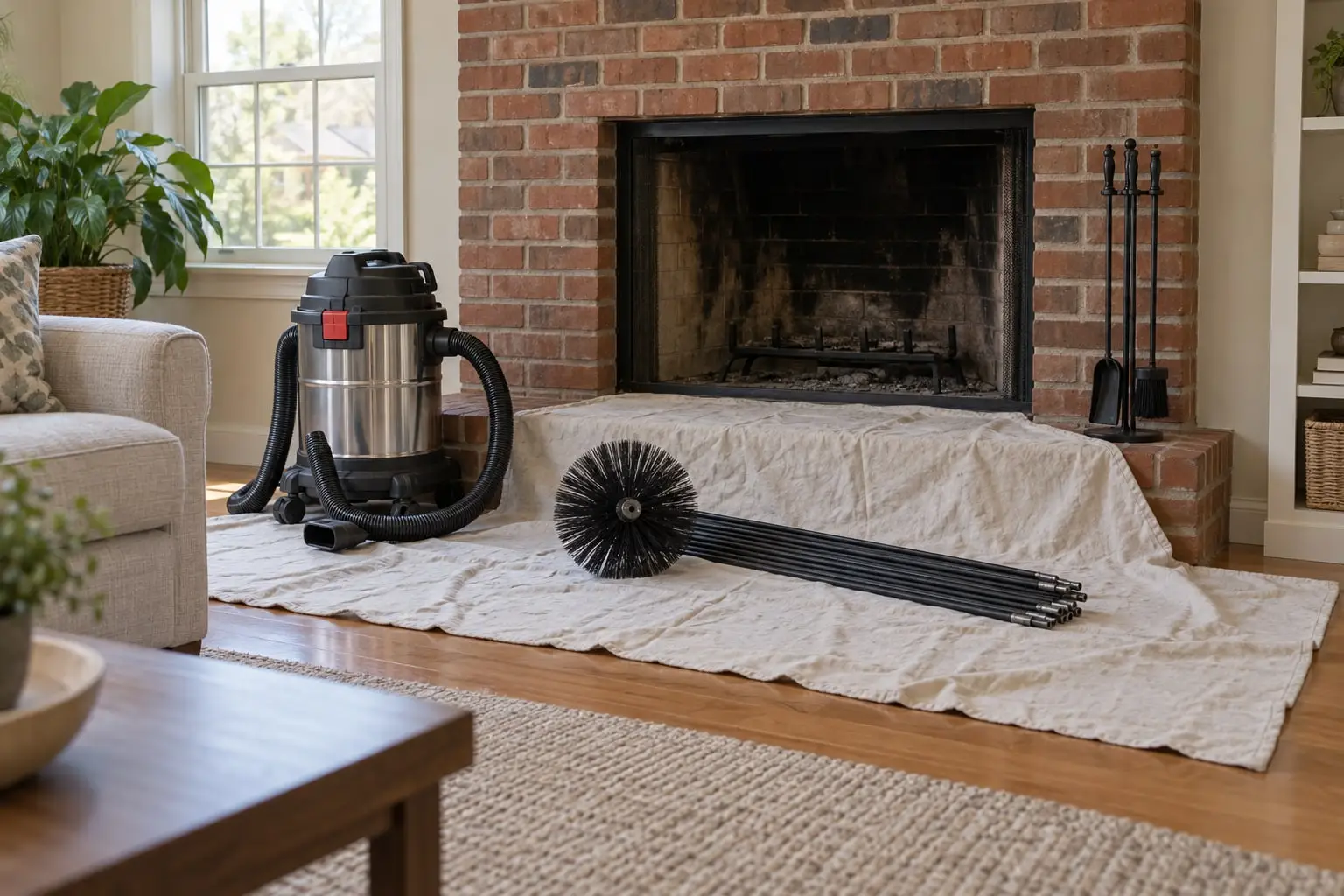
Creosote, soot and nests brushed out of the flue, with your room protected from start to finish.
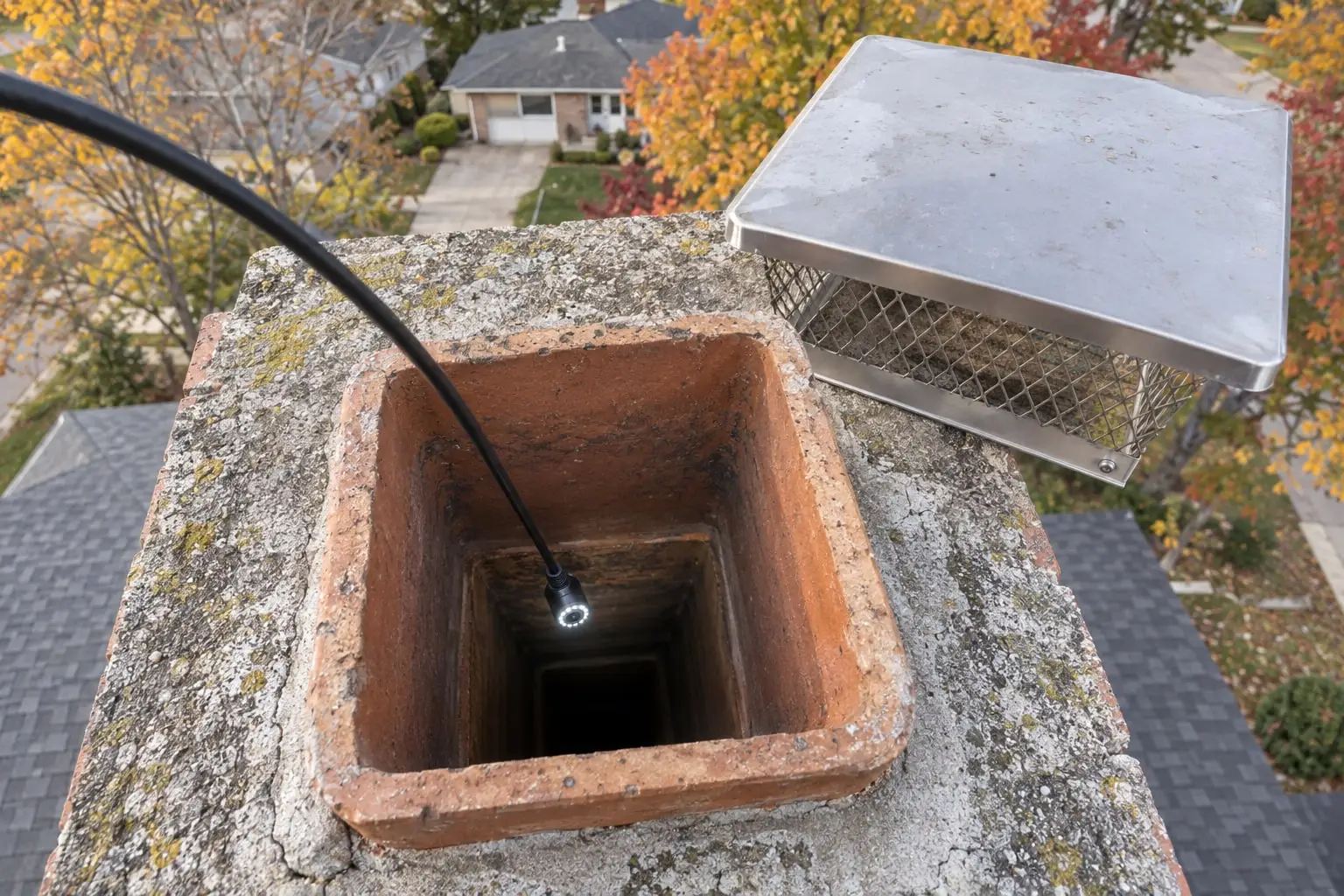
Chimney inspection
Cap to firebox, inside and out, with photos and a plain explanation of what we found.
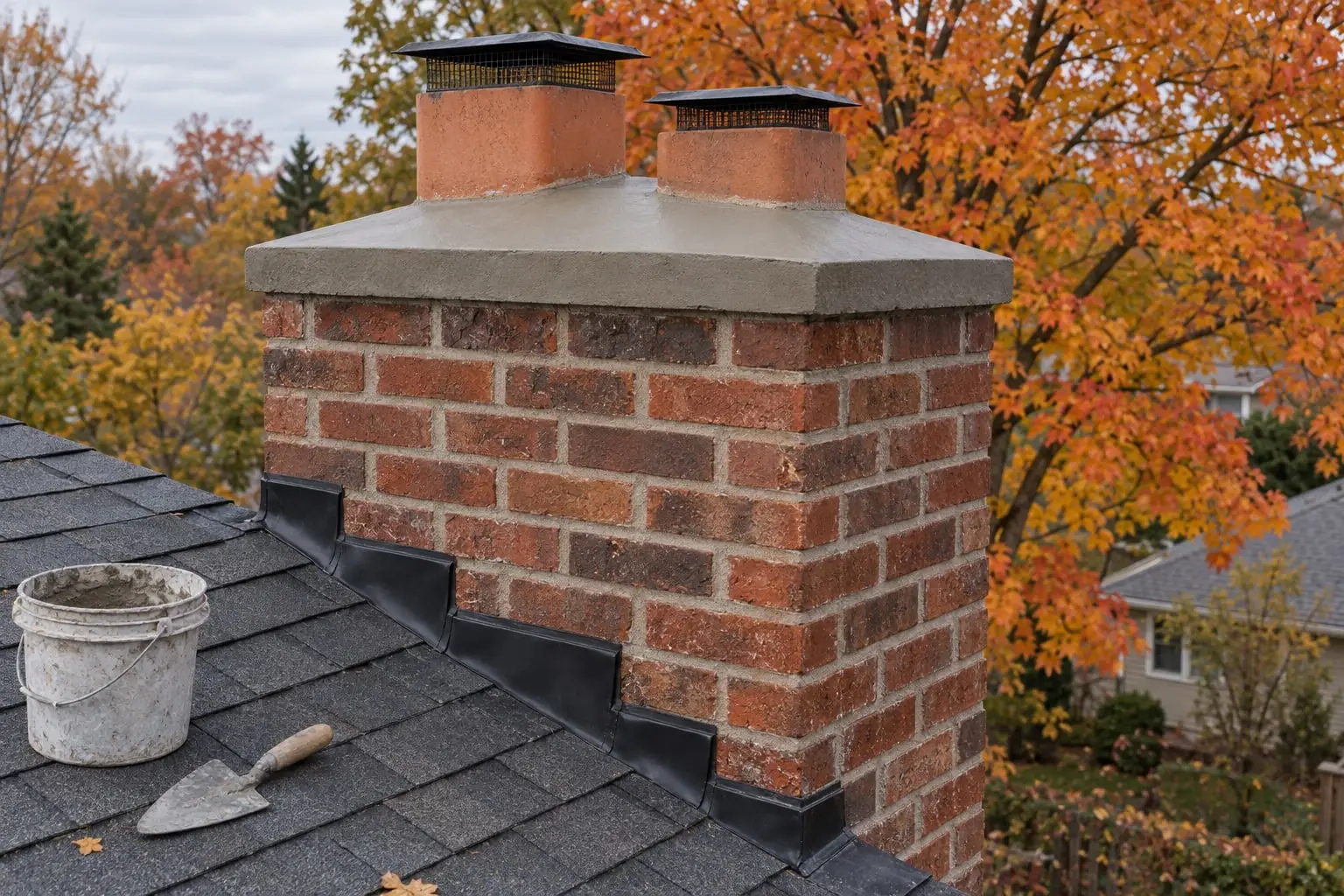
Chimney repair
Crowns, caps, flashing, mortar joints and brick, repaired before the next freeze makes them worse.
Ready for a chimney that draws clean again?
Tell us about your chimney and how to reach you. We will call you back to set a time.