
Chimney sweep in Naperville, IL
Every fire leaves creosote on the inside of the flue. A sweep brushes it out from top to bottom, clears nests and debris and leaves your living room as clean as we found it.
- Fireplaces, stoves and inserts
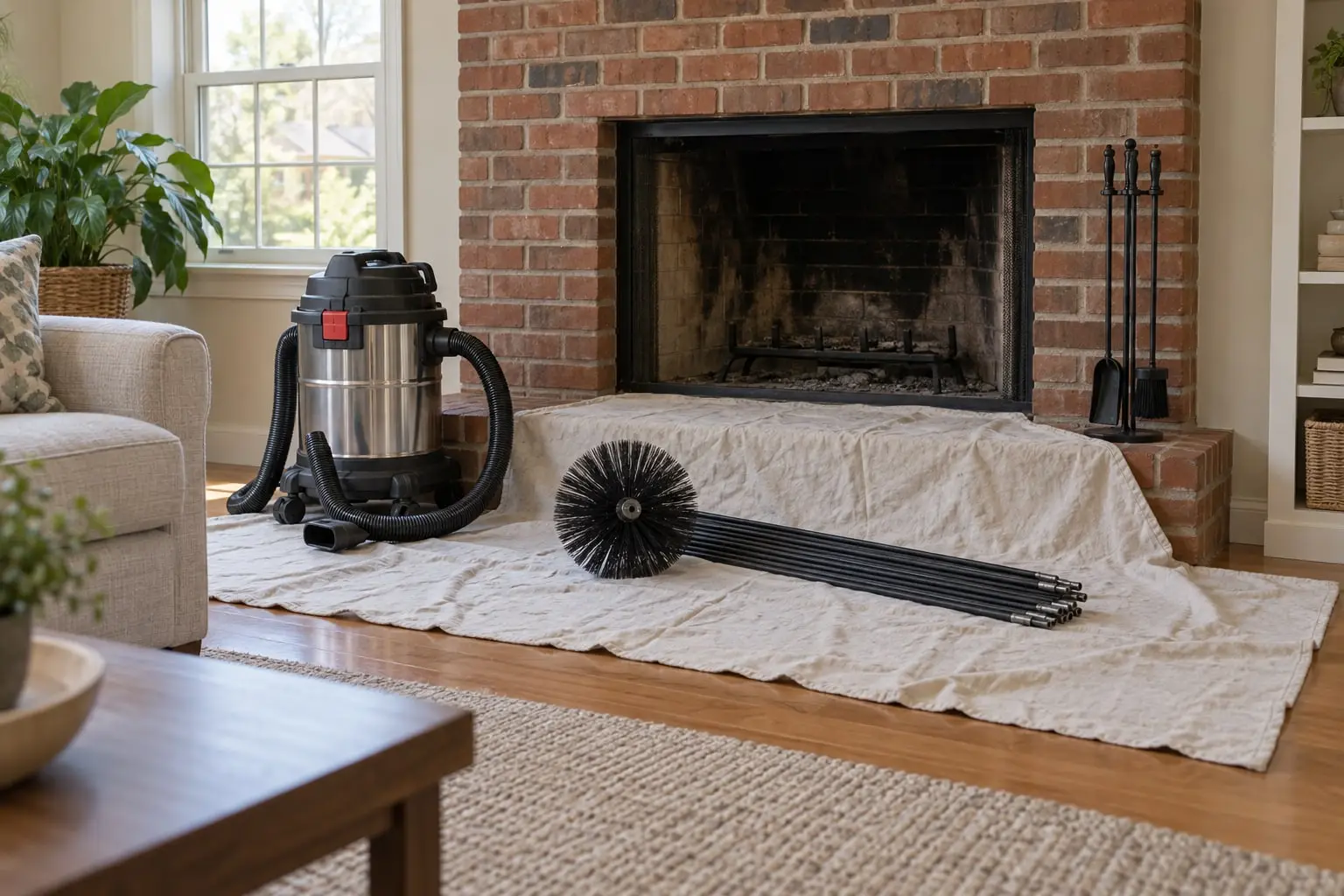
- Drop cloths and HEPA vacuum
- Before the heating season
When it is time for a sweep
Creosote is the tar and soot that smoke leaves behind as it cools on its way up the flue. It builds up faster with wet or green wood, with fires that smoulder overnight and with stoves turned down low, which is how many Naperville homes heat through a cold snap. It is flammable, and a thick layer is what a chimney fire burns.
As a rule, a fireplace or stove in regular use should be swept once a year. These signs mean it is due sooner.
- Black, flaky or shiny tar-like deposits inside the firebox or on the damper
- A campfire smell in the room, worse on humid days or when the air conditioning runs
- Smoke that rolls into the room instead of going up the flue
- Fires that are hard to start or will not burn hot
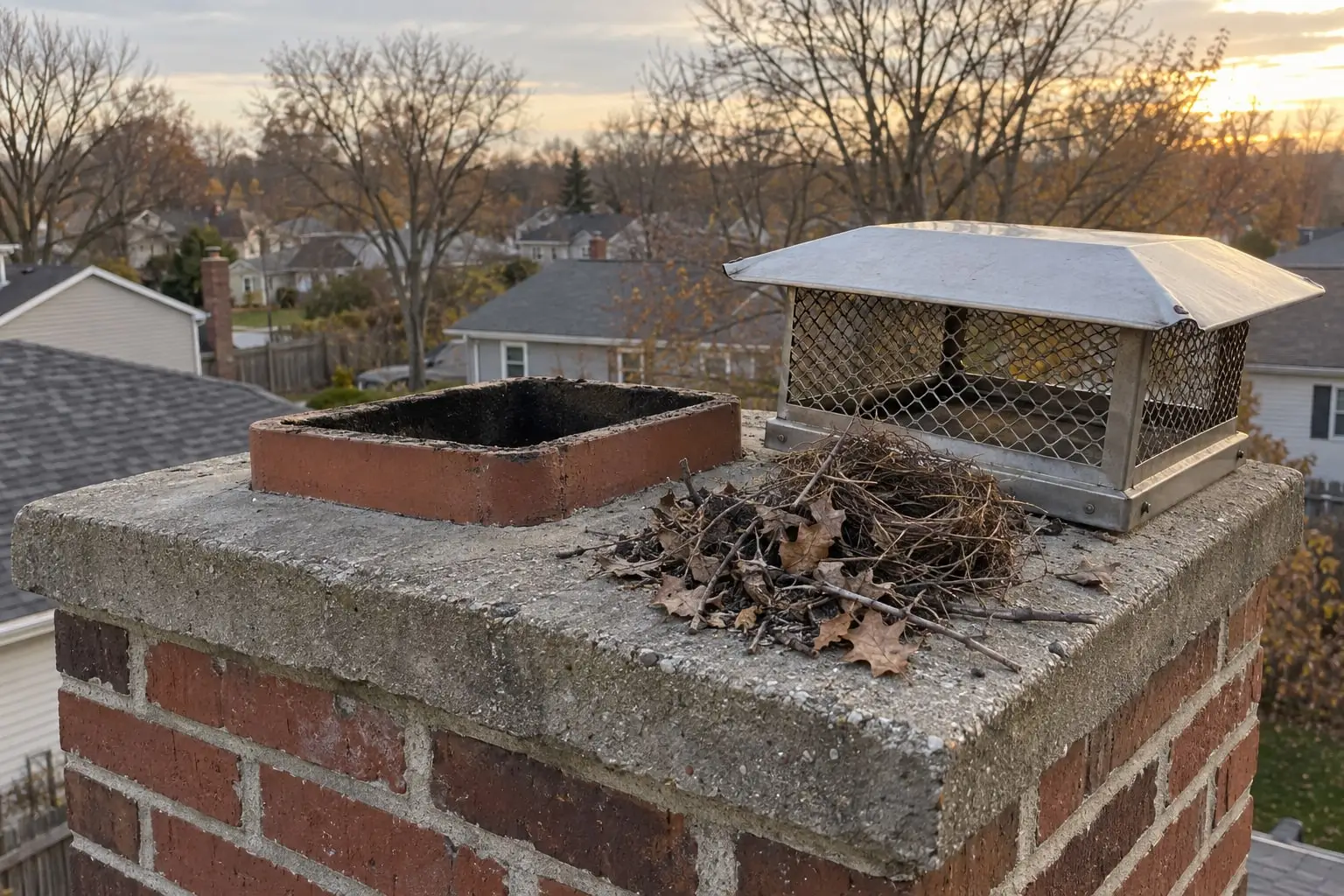
- Leaves, twigs or debris falling into the firebox
- Birds or animals heard in the chimney
- More than a year since the last sweep
What you get with Chimney sweep
A safer fire
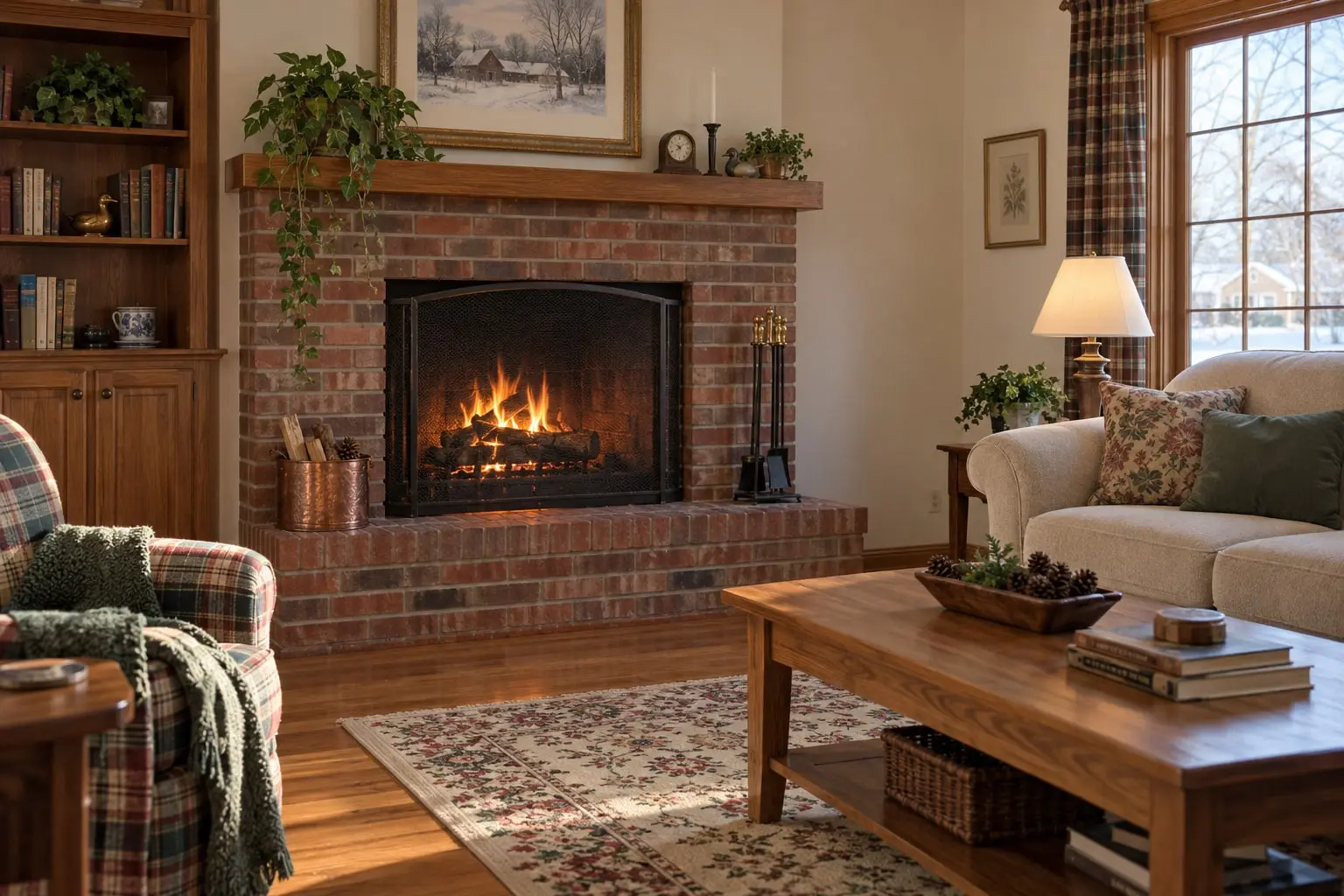
Creosote is what a chimney fire burns. Removing it is the single most effective thing you can do to keep a fire where it belongs, in the firebox.
A better draft
A clear flue pulls smoke up and out. Fires start more easily, burn hotter and leave less smoke and smell in the room.
A clean room after
Drop cloths go down before any tool comes out, and a HEPA-filtered vacuum runs while we sweep, so soot stays in the chimney and out of your house.
A look while we are there
With the flue open we check the cap, the damper and the smoke chamber, and we tell you plainly about anything that needs attention.
What a chimney sweep includes
A sweep is more than a brush down the chimney. This is what we do on every visit.
- Floor and furniture covered around the hearth
- Flue brushed from top to bottom with brushes sized to the liner
- Smoke shelf, smoke chamber, damper and firebox cleaned
- Stove and insert connector pipes swept and refitted
- Nests, leaves and debris removed from the flue
- Cap, damper and liner checked, with photos of anything worth showing you
- Hearth vacuumed and the room left clean
Wood stoves and inserts
A stove or insert burns slower and cooler than an open fireplace, which is efficient but builds creosote faster in the flue and the connector pipe. We sweep those too, and we look at the parts that wear out on a stove: door gaskets, catalytic combustors on stoves that have one, and the cap at the top of the flue.
If your stove has started to smoke, burn poorly or need more wood than it used to, a sweep and a look at those parts is usually the place to start.
Chimney sweep questions
How long does a chimney sweep take?
About an hour for a typical fireplace, a little longer for a stove with a connector pipe or a chimney that has not been swept in years. We will give you an idea when we book the visit.
Will a sweep make a mess in my house?
No. We cover the floor around the hearth before we start and run a HEPA-filtered vacuum while we work, so the soot goes into the vacuum, not into the room.
Do gas fireplaces need sweeping?
Gas burns cleaner than wood, so a gas fireplace does not build creosote. Its vent still needs a yearly check and cleaning for nests, debris and corrosion. That is our chimney cleaning service.
What is the difference between a sweep and a cleaning?
We use sweep for brushing creosote out of a wood-burning flue, and cleaning for the wider job of clearing a chimney or vent of whatever is in it, including nests, debris and heavy buildup. Many visits include both.
When should I book my sweep?
Late summer or early fall is best, before you need the fireplace. Calendars fill up once the first cold night arrives, so booking early gets you the day and time you want.
Other services we provide
Chimney cleaning
The whole chimney cleared of soot, creosote, nests and debris, from the cap down to the firebox.
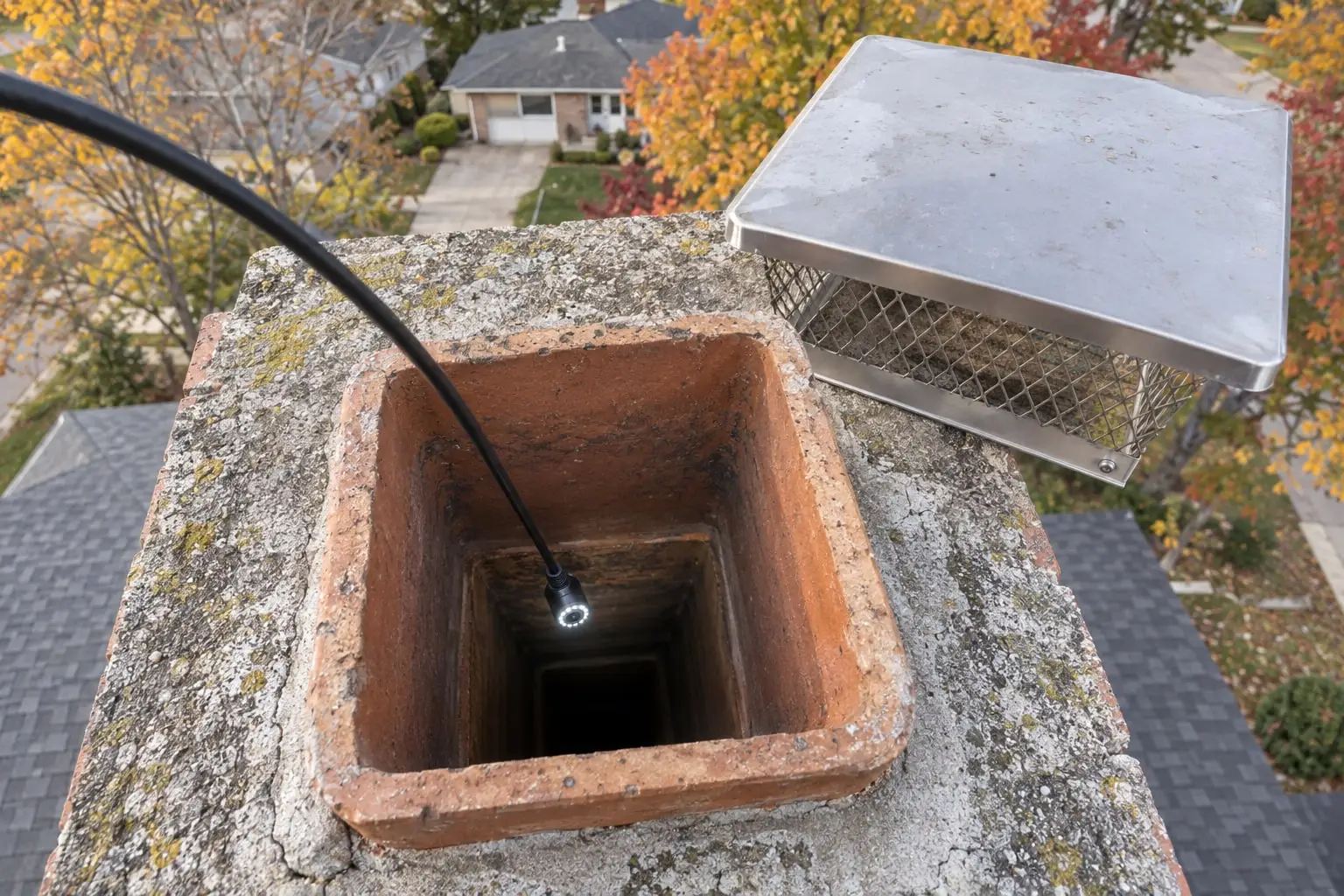
Chimney inspection
Cap to firebox, inside and out, with photos and a plain explanation of what we found.
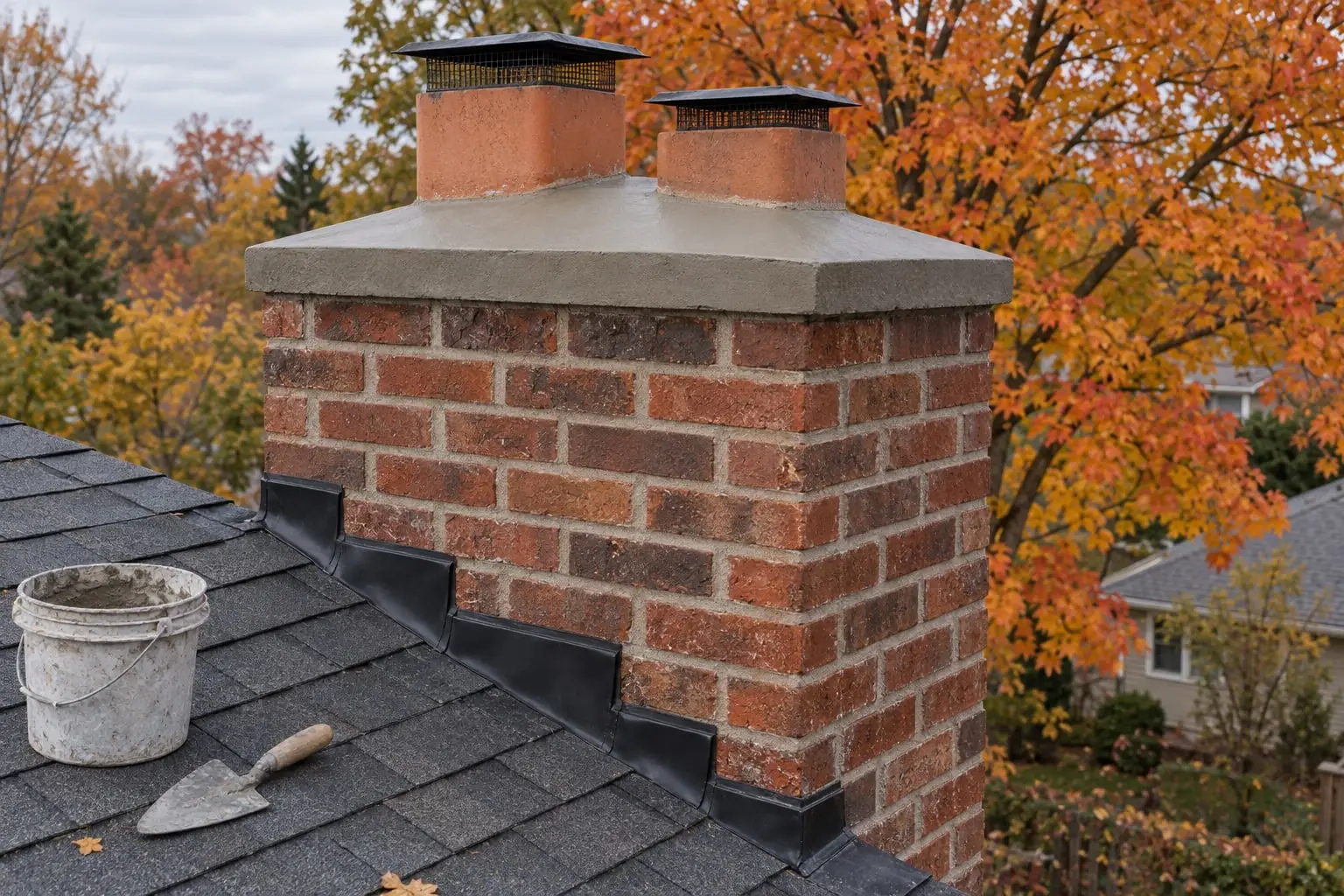
Chimney repair
Crowns, caps, flashing, mortar joints and brick, repaired before the next freeze makes them worse.
Ready for a clean, safe fire this winter?
Tell us about your chimney and how to reach you. We will call you back to set a time.