
Chimney repair in Naperville, IL
A northern Illinois winter freezes and thaws a chimney dozens of times. We find where water is getting into the masonry, show you what we found and repair the crown, cap, flashing or brick that failed.
- Crowns and caps
- Flashing and leaks
- Tuckpointing and brick
Signs your chimney needs repair
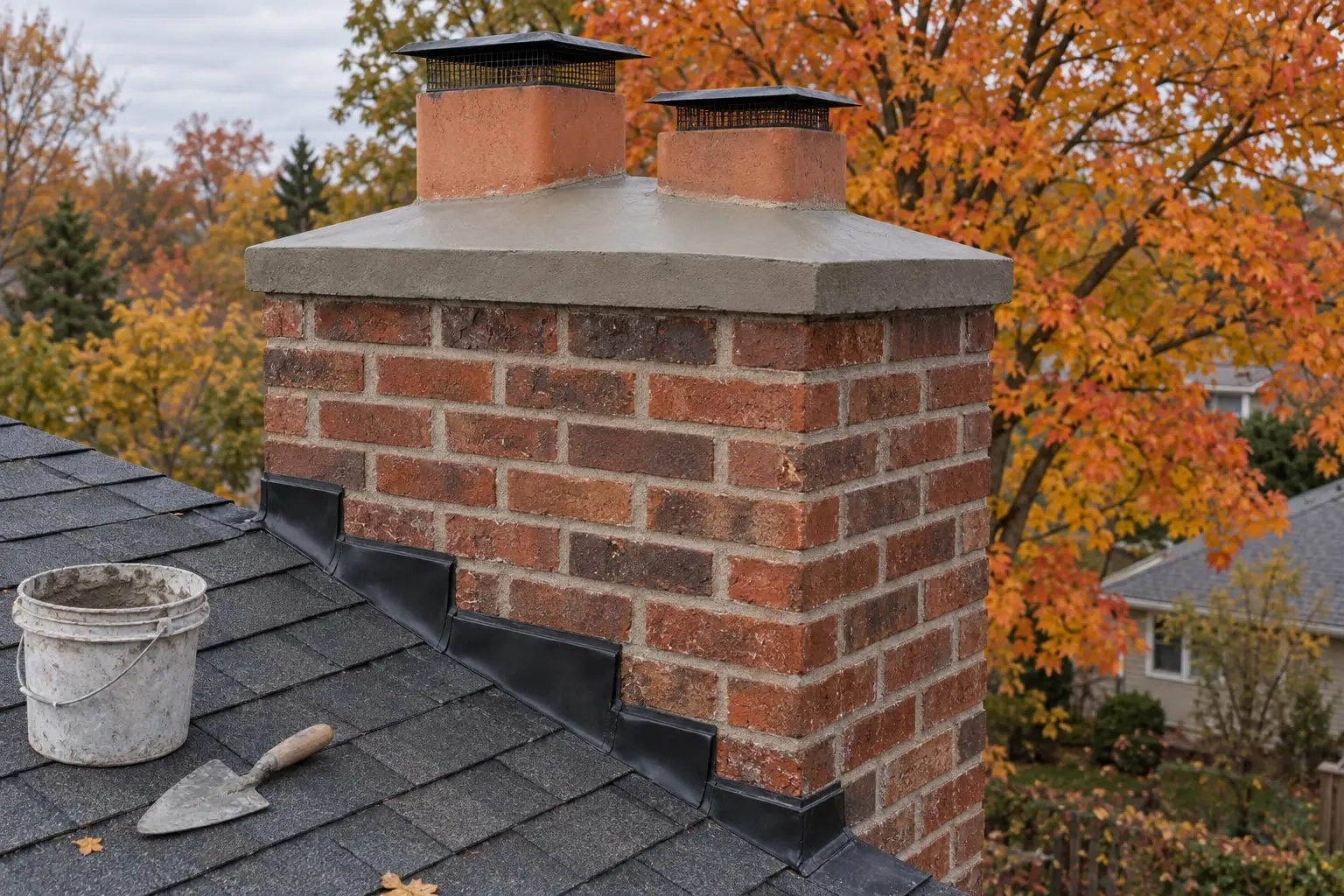
A brick chimney wears from the top down. The crown cracks, water gets into the joints, and each freeze in January and February pushes the cracks a little wider. By the time a stain shows up on the ceiling or bricks start landing on the roof, water has usually been getting in for a few seasons.
Call us if you notice any of these. Almost all of them cost less to fix early, and none of them improves over another winter.
- A water stain on the ceiling or wall beside the chimney after rain or snowmelt
- Cracks in the concrete crown on top of the chimney, or pieces of it on the roof
- Mortar that crumbles out of the joints or sits deeper than the brick face
- Bricks whose face flakes or pops off (spalling)
- White, chalky deposits on the brick (efflorescence), a sign water is moving through it
- A rusted, bent or missing chimney cap
- Flashing that has lifted, rusted or been patched over with old caulk
- Rust on the damper or water in the firebox
What you get with Chimney repair
We find the cause
A stain indoors can start at the crown, the cap, the flashing or the brick itself. We check each one before we recommend anything, so the repair goes where the water really gets in.
Built for freeze and thaw
Crowns are formed to slope and overhang so water drips clear of the brick, and joints are repointed with mortar matched to the old brick, so the repair moves with the chimney instead of cracking away from it.
Photos and a written scope
You see what we see. We photograph the problem areas on the roof and put the repair in writing before work starts, so there are no surprises on the day.
Care for older brick
Many Naperville homes have older, softer brick. We repoint and replace it with materials that suit it, because a mortar harder than the brick around it makes the brick fail first.
What a chimney repair can include
Every repair starts with a full look at the stack, the roof around it and the inside of the flue. From there the work is matched to what failed. These are the repairs we do most often in Naperville homes.
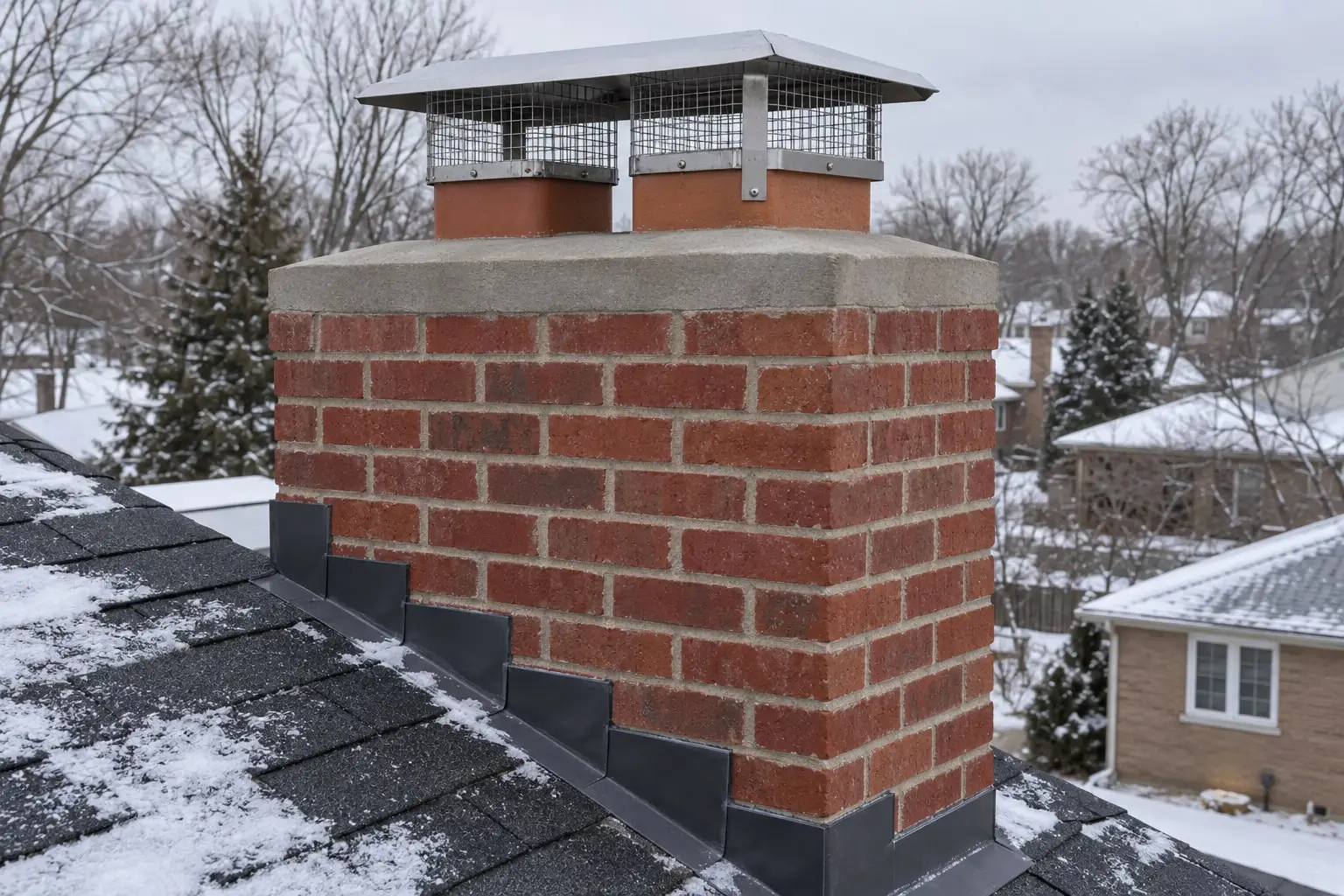
- Crown repair, sealing or a new crown with a proper slope and overhang
- Stainless steel chimney caps and multi-flue lids sized to the flue
- Flashing repair or new flashing where the chimney meets the roof
- Tuckpointing: grinding out failed mortar joints and repointing them
- Replacing spalled or broken bricks to match the existing masonry
- Water repellent that lets the brick breathe
- New flue pipes and hoods on factory-built and flat-roof chimneys
Why Naperville chimneys crack
Brick and mortar soak up water like a sponge. In a mild climate that water simply dries out again. Here it freezes. Water expands when it turns to ice, so every hard frost after a wet day pries at the crown, the joints and the face of the brick. Spring rains and snowmelt then carry more water into the cracks the winter opened.
A chimney also stands alone above the roof, exposed on every side to wind, sun and snow. That is why the top of the stack, the crown and the first courses of brick below it, usually fail first, and why we look there before anywhere else.
Repair or rebuild?
Most chimneys we see need a repair, not a rebuild. A cracked crown, failed flashing and a few rows of open joints can all be fixed while the rest of the masonry stays in place. If a section of the stack is loose or the damage runs deep, we tell you plainly, show you the photos and explain what the bigger job involves before you decide.
Chimney repair questions
Can chimney repairs be done in winter?
Some can. Caps, lids and flashing can go on in most weather. Mortar and concrete need temperatures above freezing to cure properly, so tuckpointing and new crowns are best scheduled from spring to fall. If a repair cannot wait, we tell you what can be done safely now and what should wait for warmer days.
Can you repair a crown without rebuilding the chimney?
Usually, yes. Hairline cracks can be sealed with a flexible crown coating, and a crown that is broken or too flat can be removed and formed again on top of the existing brick. The brick below stays as it is unless it is damaged too.
Do I need a new chimney cap?
If your cap is rusted through, bent or missing, yes. A cap keeps rain, snow, leaves and animals out of the flue. For chimneys with more than one flue, a single multi-flue lid can cover them all.
What is tuckpointing?
It is grinding out the old, failing mortar from the joints between bricks and filling them with fresh mortar. Done before water gets behind the brick, it can add many years to a chimney.
My chimney leaks only when it rains hard. Why?
Light rain runs off, but a heavy, wind-driven storm pushes water into the weakest point: usually a cracked crown, an open joint in the flashing or a missing cap. We test each of those so the repair goes where the water really enters.
Other services we provide
Chimney inspection
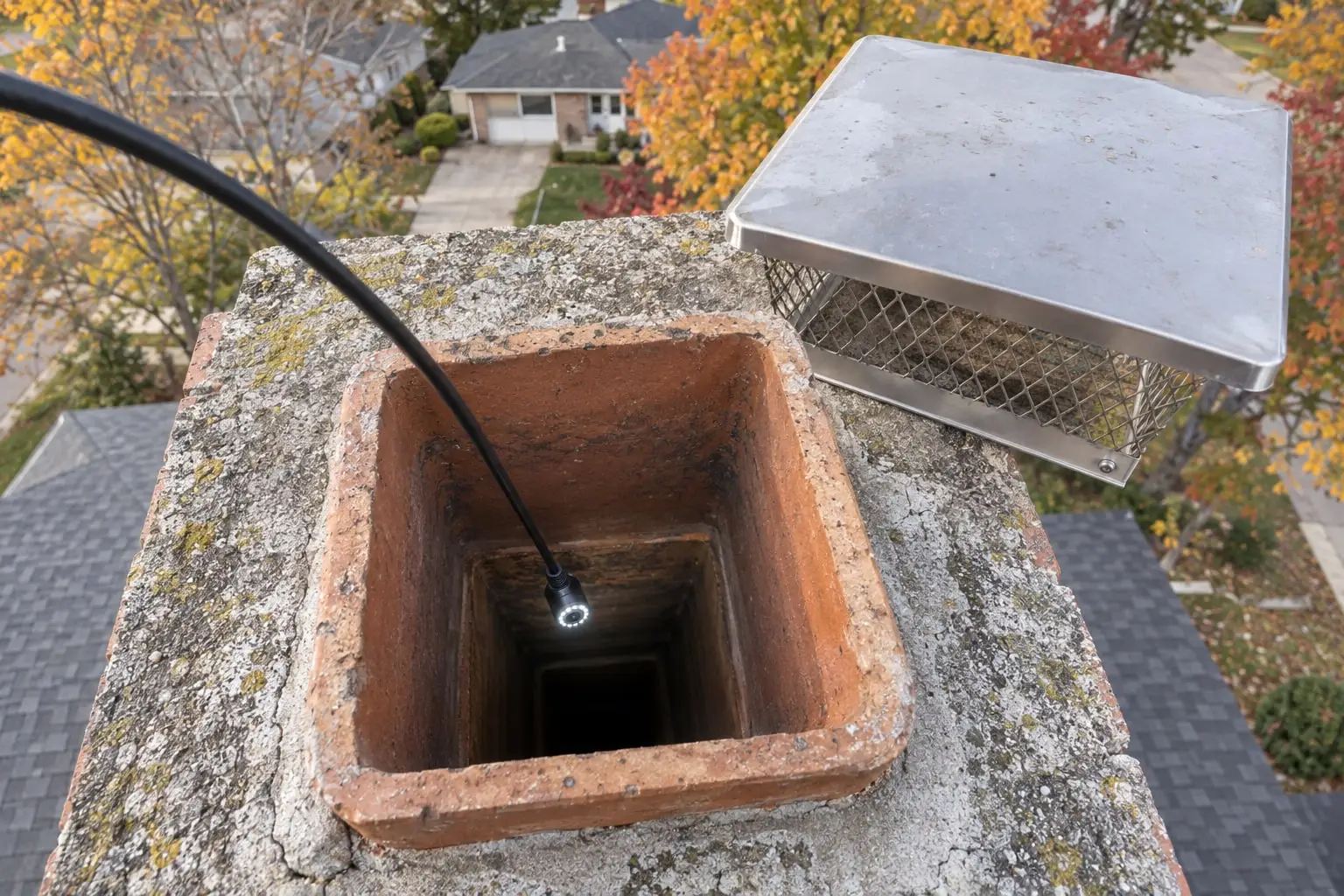
Cap to firebox, inside and out, with photos and a plain explanation of what we found.
Chimney sweep
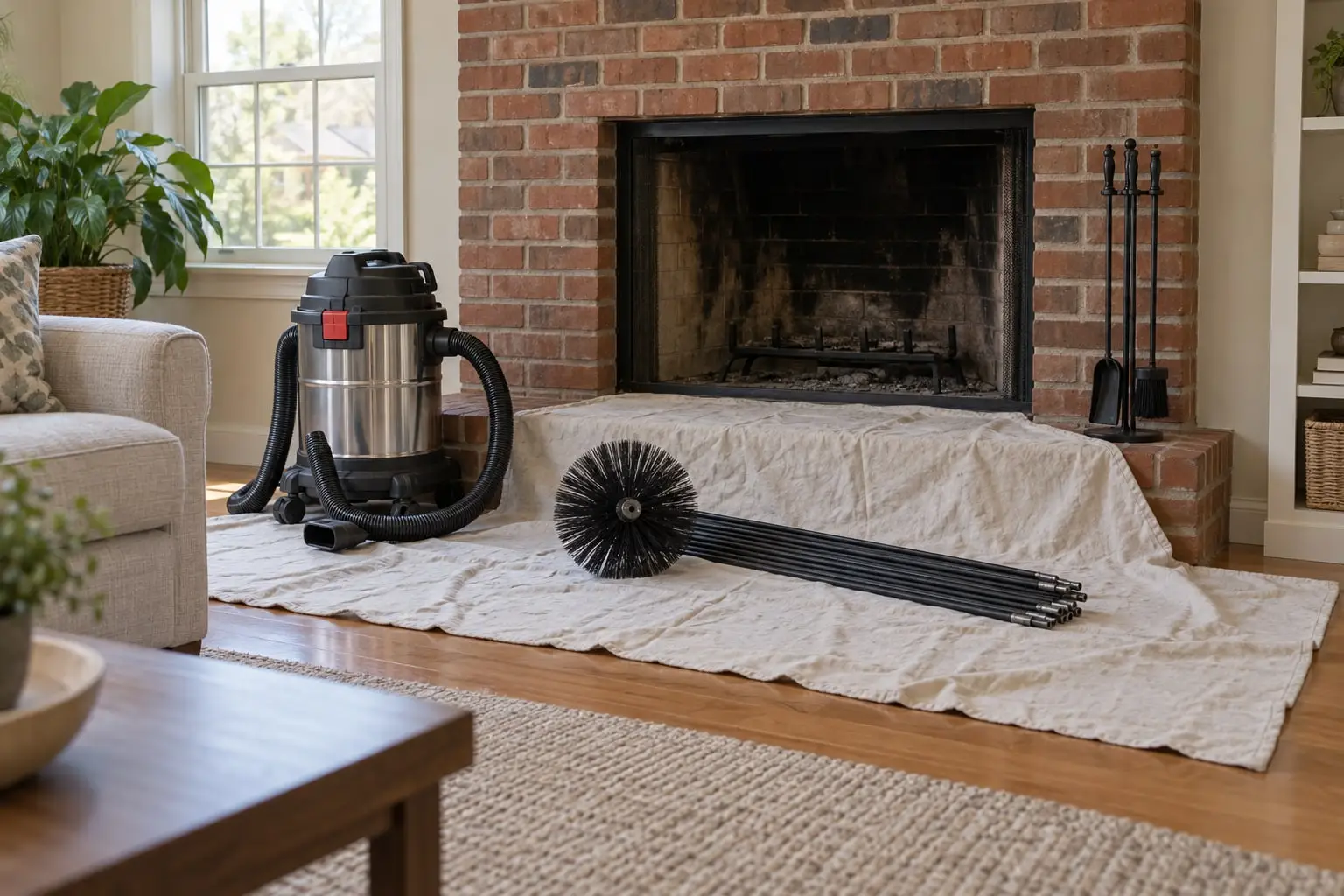
Creosote, soot and nests brushed out of the flue, with your room protected from start to finish.
Chimney cleaning
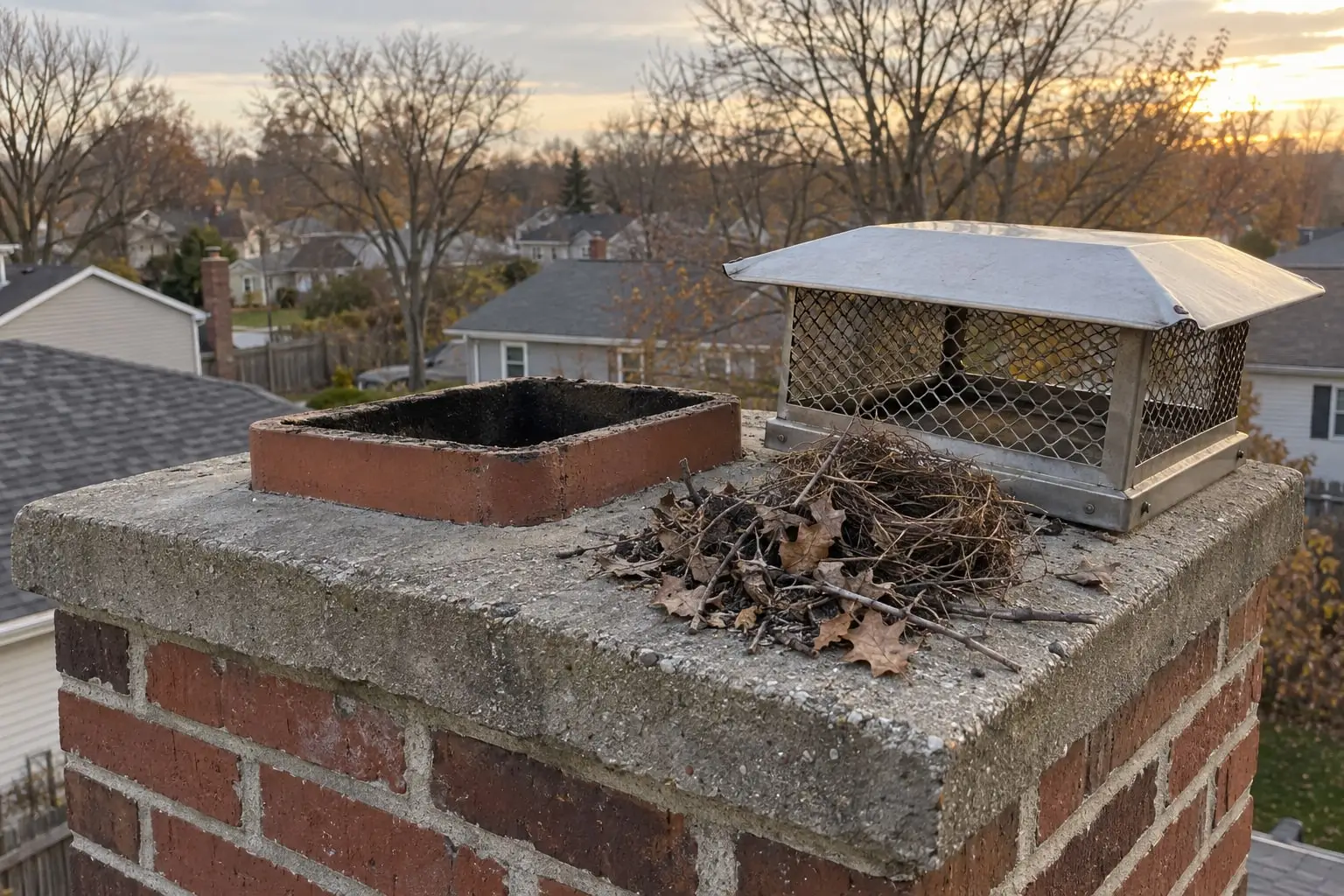
The whole chimney cleared of soot, creosote, nests and debris, from the cap down to the firebox.
Ready to stop that chimney leak?
Tell us about your chimney and how to reach you. We will call you back to set a time.